Black History Month is not a period on a calendar. It is an invitation.
An invitation to reflect on the brilliance, creativity, resilience, and joy that define Blackness, past and present. An invitation to engage in honest dialogue. An invitation to build the kind of community that reflects our values not only in what we say, but in how we show up.
At Orchestra, we approach Black History Month with intention, curiosity, and a belief that culture is something we actively shape. This year, our programming brought colleagues together across offices and disciplines through storytelling, film, and conversation.
A special conversation with Yaya DaCosta
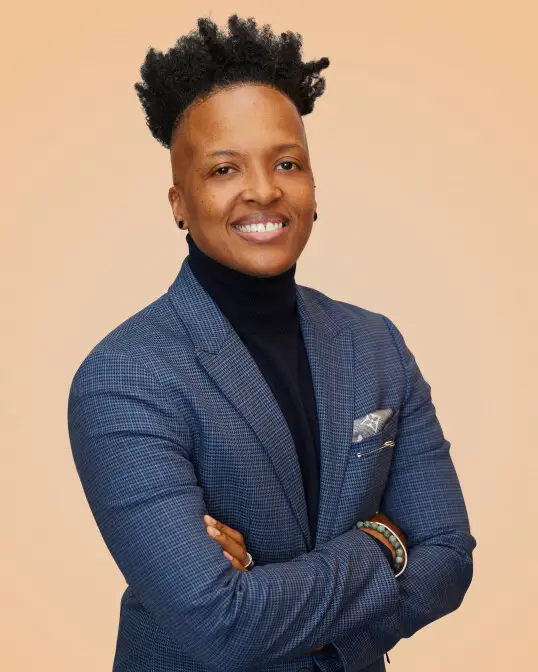
On February 25, we welcomed acclaimed actress, producer, and speaker Yaya DaCosta for a live, company-wide virtual conversation.
Yaya’s work spans television, film, and stage, from her role on the long-running medical drama Chicago Med to her portrayal of Whitney Houston in the biopic Whitney. Beyond her performances, she is deeply engaged in conversations about identity, representation, creative agency, and purpose.
In our discussion, Yaya spoke about intentionally choosing roles that stretch her and allow her to contribute to stories that are meaningful and socially resonant. She reflected on the responsibility that comes with storytelling and the choices behind the narratives we elevate. “Art really does affect humanity,” she explained. “It’s what we choose to focus on that we amplify.”
That insight is just as relevant for communications professionals working with clients. Yaya emphasized the importance of individuality and staying true to a distinct voice, especially in an era increasingly shaped by AI. “It’s about details and staying original,” she said. “It’s going to be even more impactful when [you] don’t sound like everyone else. When [your] specific signature, [your] frequency, is noticeable and distinct.”
For our teams, the conversation was both inspiring and grounding. It reinforced the idea that storytelling has the power not only to reflect culture, but to shape it — and that authenticity, intention, and trust in one’s path are essential to that work.
Reclaiming stories through film
Across our New York, DC, Boston, San Diego, Seattle, and San Francisco offices, we hosted screenings that centered Black creators and narratives that are often overlooked.
We screened High Horse: The Black Cowboy, the 2025 docuseries executive produced by Jordan Peele, which illuminates the essential and frequently erased role of Black cowboys in shaping the American West. By revisiting history with greater accuracy and depth, the series challenges audiences to reconsider whose contributions are remembered and whose are intentionally written out of history and marginalized.
We also screened Fruitvale Station, filmmaker Ryan Coogler’s debut feature. The film chronicles the life and legacy of Oscar Grant, a young Black father whose fatal shooting by a police officer in Oakland led to a national call for justice. It honors Grant’s humanity while inviting viewers to confront the impacts of systemic racism.
These screenings were not passive experiences. They invited us to grapple with history, sparking conversation and inviting connection. And they reminded us that storytelling does shape culture, helping to propel us into action.
Beyond February
Black history is a story of bold ideas and collective action. Of creators and organizers. Of truth-tellers and builders.
It is also a reminder that meaningful change is sustained work. For organizations, including ours, the key is in how we allow Black History Month to shape the way we operate year-round, long after February ends.
The work continues. And we build it together.