When cities talk about waterfront resilience in a changing climate, the conversation often revolves around risk: how to hold back storm surge, reduce flooding, limit damage.
But waterfronts are also public spaces, a major part of everyday life in our cities. That means resilience has to support the communities that make use of these spaces between disasters, too.
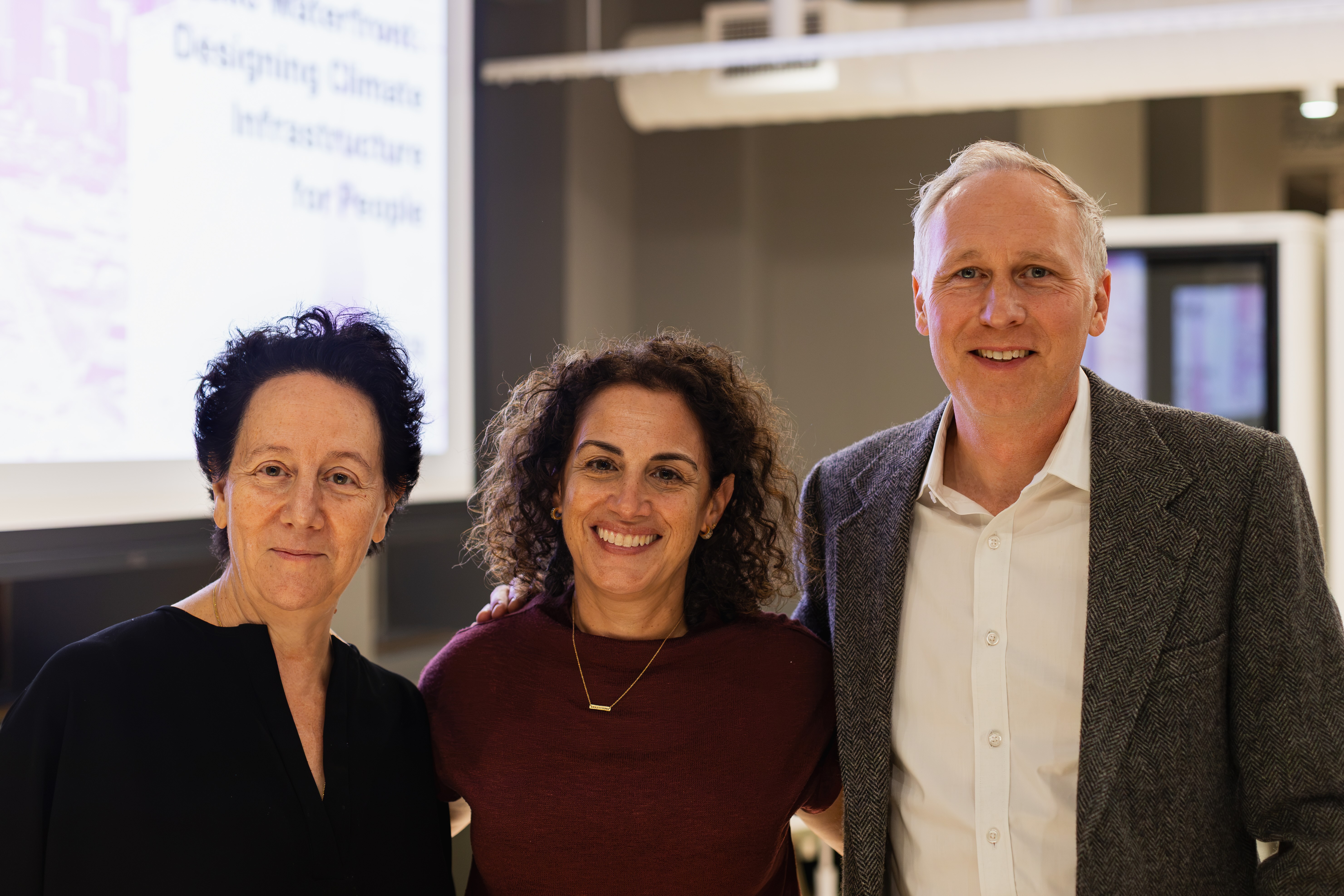
This idea came through clearly during Climate Week at Orchestra, where we hosted a conversation on how cities can design waterfronts for both climate risk and public life. The panel brought together three clients: Laura Crescimano, co-founder and principal of San Francisco-based SITELAB urban studio; Claire Weisz, founding principal of New York’s WXY architecture + urban design; and Rob Freudenberg, vice president for energy and environment at Regional Plan Association, who moderated the conversation.
SITELAB’s and WXY’s work spans major waterfront projects on both coasts, from San Francisco’s long-term resilience program to the rebuilding of the Rockways post-Hurricane Sandy. Together, the panelists made the case that real climate resilience is just as much about inviting public life in as it is about keeping disaster out.
Measure what people do there
A broader definition of resilience requires a broader measure of success.
At Rockaway Beach in Queens, New York, Weisz and her team rebuilt the boardwalk after Hurricane Sandy, incorporating flood-resistant features like planted dunes and retaining walls. On top of protecting against future storms, the project was designed to reconnect neighborhoods to the ocean. To measure its community impact, Weisz looks at how people actually use the space, including whether more people are walking and biking there and how long they stay.
Crescimano offered another example from her own work: after a new public plaza opened in San Francisco, she watched a school group arrive and spontaneously claim it as a lunch spot. “It was not something that was planned for, and no one had actively communicated with that school,” Crescimano said. “To me, that was the sign of success. They had a sense of invitation and ownership in that space.”
That sense of ownership can help build long-term stewardship, Crescimano explained. People are more likely to care for and protect places they actually use and feel connected to. That, too, is a measure of resilience.
Give people something now
Climate infrastructure work moves deliberately and slowly. In San Francisco, for example, Crescimano and SITELAB are helping plan a roughly seven-and-a-half-mile effort to make the city’s waterfront more resilient to flooding and sea-level rise. The work could take decades, bringing years of planning, construction and disruption for businesses and residents along the way.
That makes near-term improvements especially important: they give communities something useful now while laying out the larger vision.
At Fisherman’s Wharf, SITELAB is helping transform a long-vacant waterfront site into a public plaza that gives people new access to the water while the broader resilience effort moves forward. People can experience one version of the waterfront’s future now, rather than waiting decades to see what all the planning was for.
WXY’s recently completed Jones Beach East Bathhouse offers another example. The historic waterfront building was redesigned for future flood conditions while adding a new public pool and learn-to-swim opportunities. It’s part of a longer stretch of resilience work for WXY in New York, including the rebuilt Rockaway Boardwalk and Coastal Conservation Center, where long-term climate planning has gone hand in hand with public spaces people can use now.
The need to show progress along the way applies to community engagement, too. Crescimano noted that on projects that may span a generation, communities can get tired of being asked for input without seeing what comes of it; teams need to show people how their participation is shaping the work as it evolves.
As Weisz put it, “All communities require and deserve long-term engagement, and at the same time, shorter-term results. Both are necessary to get people to feel like there is something worth doing together.”
Make the future easier to see
Keeping people engaged over an extended timeline also means making a complicated project easier to understand. Resilience work can involve engineering, policy, development, economics and climate science, often all at once. Designers can help make the options clear, so people can grasp what’s being proposed and weigh in on what comes next.
“Part of our practice is communication and making what’s not yet visible visible,” Crescimano said.
During Climate Week, when so much of the conversation is focused on the scale of the climate challenge, the panel was a reminder that the response has to feel just as concrete. People need to be able to see what adaptation could mean where they live. That’s how resilience stops feeling like a distant plan and starts becoming part of how a community sees its own future.